
Blog · Design
Louvred roof or glass roof?
Both protect against rain. The difference shows on a hot afternoon in July.
What makes a bioclimatic pergola
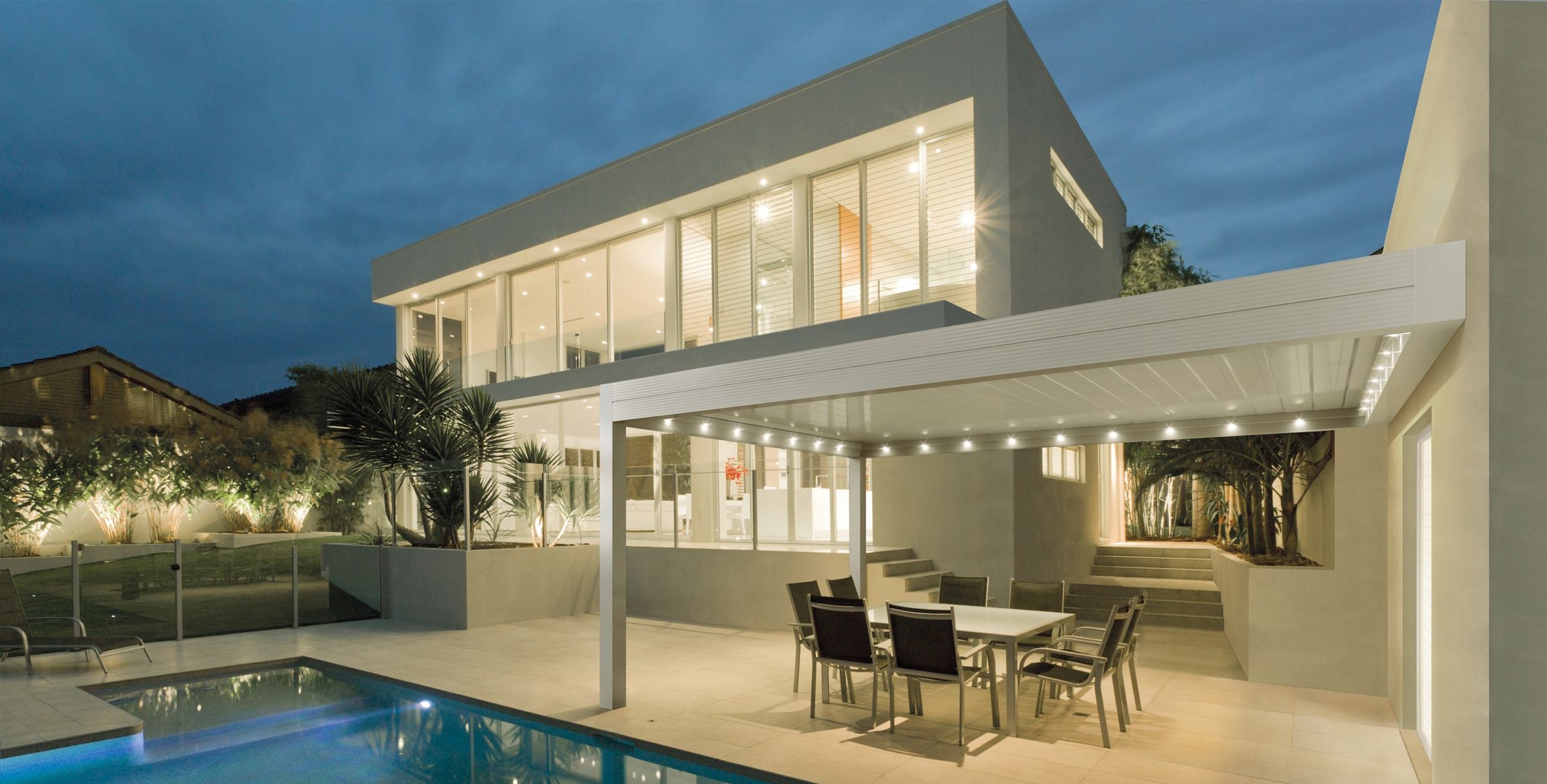
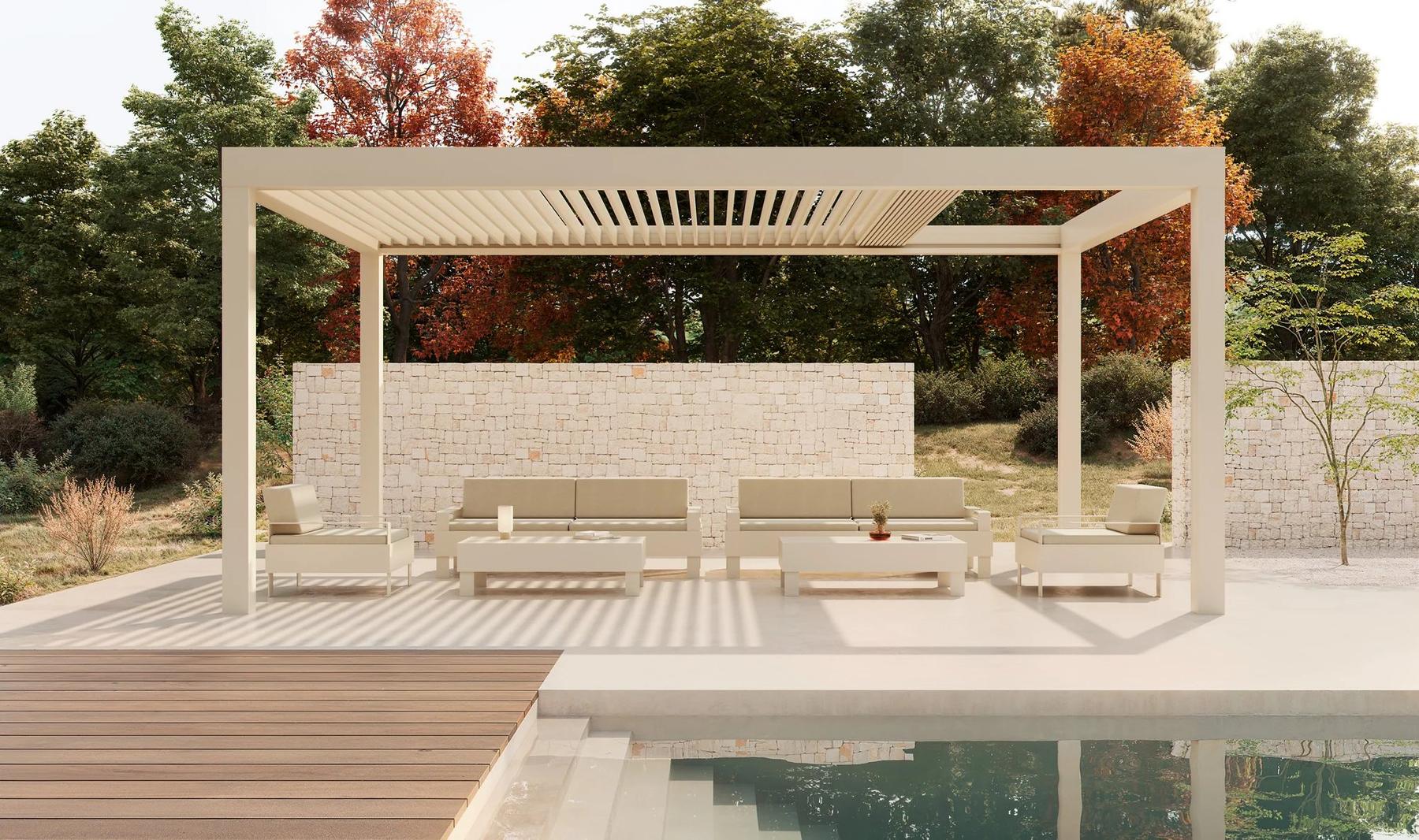
A bioclimatic pergola is an aluminium structure with rotating roof louvres. Depending on the louvre position, you let in sun and air, create shade or close the roof when it rains. You adapt the climate under the roof to the weather and time of day – hence the name. With some systems, the louvres can also be stacked into a package, leaving the sky completely open.
What makes a glass roof
A glass patio roof is a fixed roof: permanently watertight, transparent, low-maintenance in terms of mechanics. It reliably keeps out rain and lets light into the house in winter. In summer, without additional shading, it quickly turns into a greenhouse – an under-glass or on-roof awning is practically always part of it.
The comparison
- Sun & heat: Louvres regulate shade and ventilation continuously; warm air escapes upwards. Glass traps heat and needs an awning.
- Rain: Both are watertight. Louvred pergolas drain the water via gutters in the louvres and posts; in heavy rain with wind, a little water can get in due to the design – glass has the advantage here.
- Light in the house: Glass brings more light into the rooms behind it in winter. Open louvres do that too – closed ones do not.
- Care: Glass needs cleaning, otherwise you see every rain shower. Aluminium louvres are easy to care for, but have a motor, sensors and seals that should be checked annually.
- Expandability: Both can be supplemented with zip screens, sliding glass walls and LED; with louvred pergolas, the system is usually designed for this from the outset.
- Price: A simple glass roof is cheaper to buy. Add the necessary shading and the two are closer together than you might think. Flat-rate figures would not be serious – size, design and features decide.
What suits whom?
Louvred roof if you want to use the terrace as an outdoor living space – summer evenings, barbecues, lounge, outdoor kitchen – and value the comfort of a remote control. Glass roof if the main aim is to keep the path between house and garden dry, the budget is tight and the terrace is in the shade anyway.
What sizes are possible?
Pergolas are made to measure; typical terraces range from about 3 × 3 m to 6 × 4 m. One module covers up to about 5 × 7 m; larger areas are created from coupled modules or systems with extra-long louvres – up to 6–7 m wide without a central post. For windy locations – hillside, roof terrace, open fields – there are systems with a high wind resistance class.
On-site consultation
We look forward to your new favourite spot.
We come to you, look at your terrace and façade and calculate your quote right there in the meeting – throughout the Rhine-Main region.
