

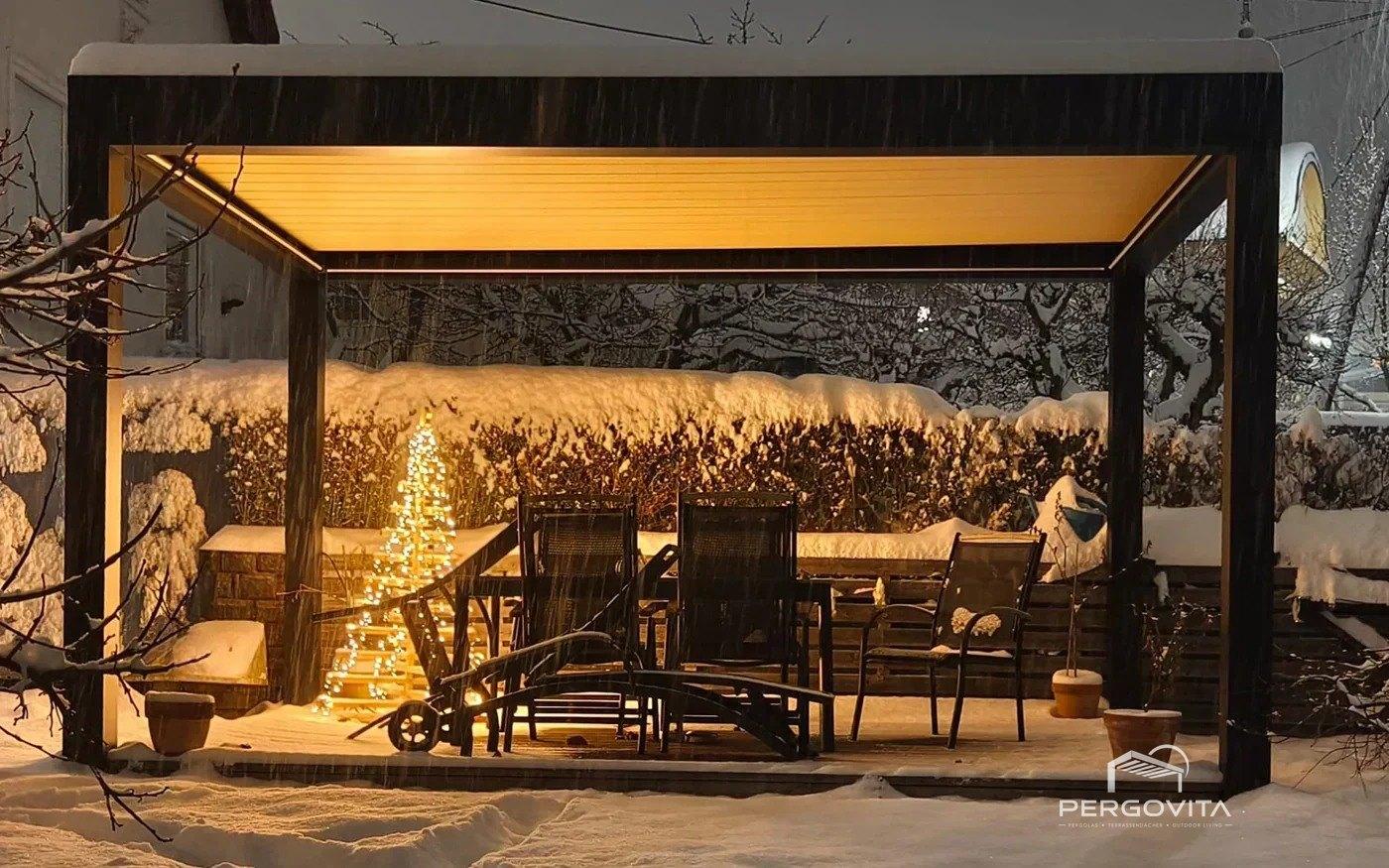
Blog · Year-round use
Pergola in winter: sitting outside when the snow comes.
A louvred pergola is not summer furniture. Planned properly, it turns the terrace into a place where you like to sit from November to March as well.
Most terraces are tidied away in October and rediscovered in April. In between lie five months in which the nicest spot by the house stands empty. It doesn’t have to be that way. An aluminium pergola is built for all weathers, and with light, glass and warmth the terrace becomes a space for the whole year.
Why a pergola is especially worthwhile in winter
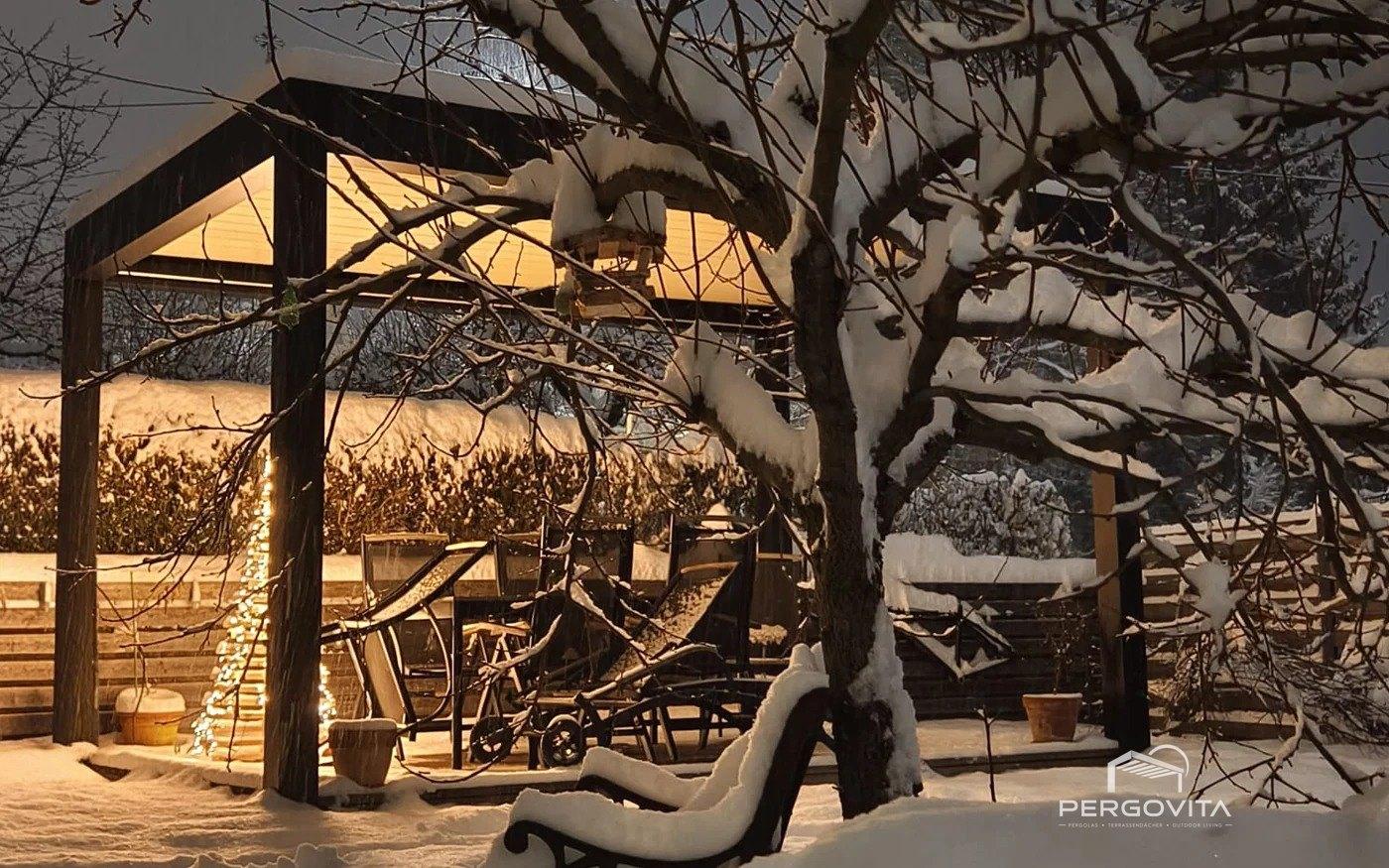
In winter, the way you sit outside changes. It gets dark early, it is quiet, and a sheltered spot with warm light is all the more inviting. The pergola connects living room and garden: it protects without closing off the space. On top of that there is a practical benefit. Furniture, flooring and the path to the patio door stay dry.
Can a pergola withstand snow?
That is the question we hear most often in autumn. The answer depends on the model and the size, which is why it is worth looking at the tested values. One example is the Altea by SIX96, one of the sturdiest pergolas in our range:
For context: 107 kilograms per square metre corresponds roughly to half a metre of powder snow or a good ten centimetres of wet, heavy snow. The snow load assumed where you live depends on the snow load zone. We clarify this during the survey and record it in the ground and structural certificate.
Why aluminium is the right material
Aluminium does not rust, does not warp and keeps its dimensions even in frost. The powder coating protects the surface from moisture and road salt. Wood works with moisture, steel needs care. You wipe down an aluminium pergola once in spring – it needs nothing more.
Where do rain and meltwater go?
When closed, the louvres form a watertight roof. The water runs into the surrounding gutter and from there down through the posts. The same applies to meltwater. All that matters is that the gutter and drains are clear. Leaves from autumn should therefore be removed before the first frost. It is a point we check at every service.

What makes winter cosy under the pergola
- Light: Warm-white LED lines in the frame or spots in the louvres. In winter, light is the most important thing, because it gets dark in the afternoon.
- Glass: Sliding glass walls keep out the wind and leave the view of the garden free.
- Zip screens: They take the force out of the wind and keep sleet out from the side.
- Warmth: Infrared radiant heaters warm instantly without heating the air.
Important for expectations: a pergola with glass is not a conservatory. It is not insulated or heated like a living space. With glass and a radiant heater, however, you can sit comfortably outside on many winter days, in a jacket and with a hot drink.
The best time to plan
If you plan in winter, you will be sitting under your pergola on the first warm day. From approval to installation takes several weeks, and in spring production and installation teams are busier. Winter is therefore the quietest time for consultation and survey.
Snow load and wind class of the Altea according to the manufacturer SIX96. The conversion into snow depths is a rough guide, because the density of snow varies greatly. The values for your installation and your location are decisive.
On-site consultation
We look forward to your new favourite spot.
We come to you, look at your terrace and façade and calculate your quote right there in the meeting – throughout the Rhine-Main region.
